
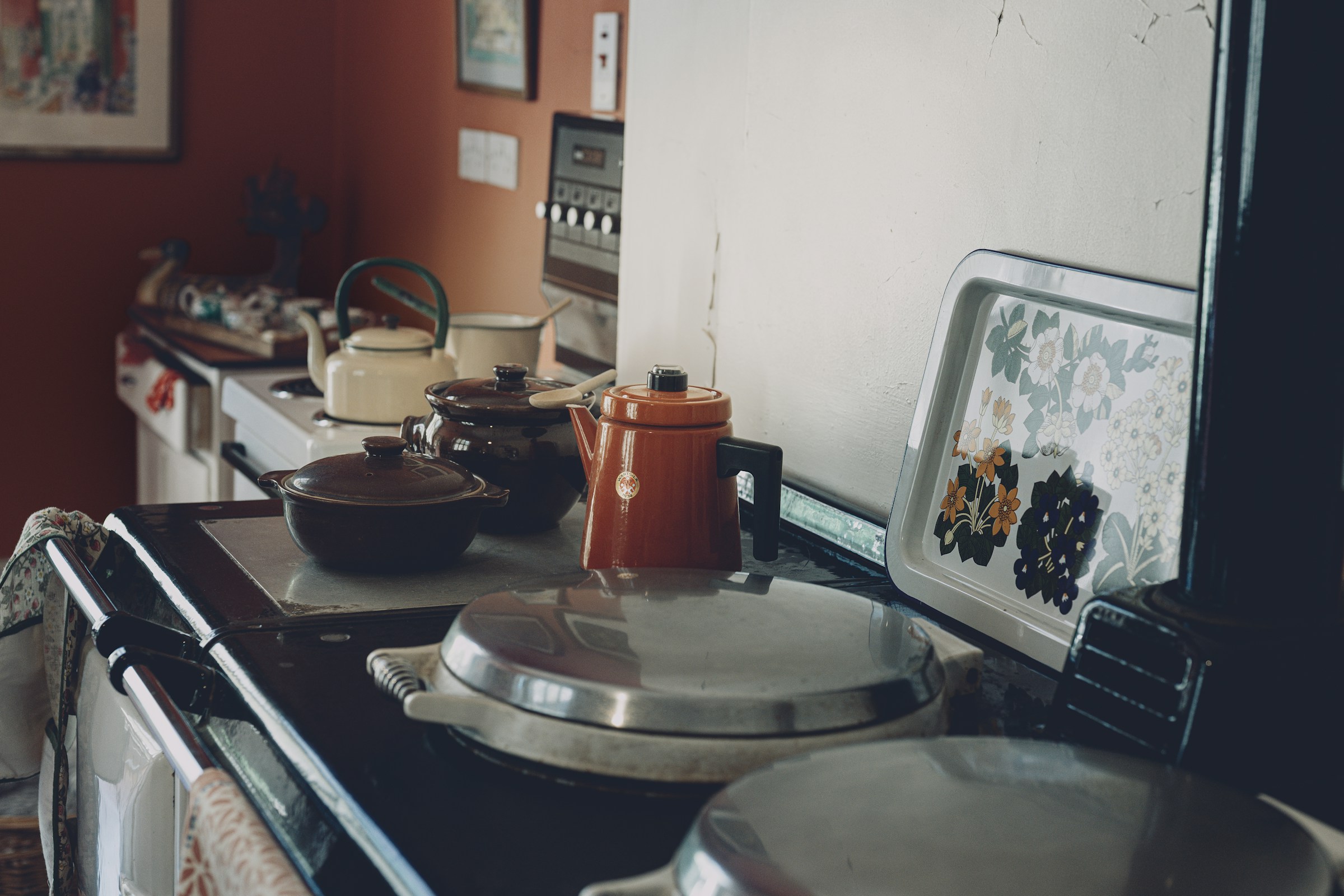
Vintage household items are making a comeback for a simple reason: many were built to last.
From cast iron pans and glass jars to clotheslines and sewing kits, these old-fashioned staples can help you spend less on disposable products and replacements.
You don’t need to fill your home with antiques to save money.
A few durable, reusable items can lower everyday costs while helping you waste less.
Here are some practical vintage household items worth bringing back into your routine.
Why Vintage Household Items Can Save Money
- Built for durability: Many older household items were made to withstand years of regular use, so you replace them less often.
- Reduce disposable products: Reusable items can replace paper towels, plastic containers, disposable napkins, and other everyday purchases.
- Use little or no electricity: Manual tools such as hand beaters, clotheslines, and carpet sweepers can help reduce energy use.
- Encourage repairing: Simple tools like sewing kits make it easier to fix damaged clothing and household items instead of replacing them.
- Lower everyday costs: Reusable kitchen, cleaning, and storage items can help reduce spending on groceries and household supplies.
21 Vintage Household Items That Save Money Today
1. Cast Iron Skillet
A cast iron skillet can last for decades, and a well-cared-for one can even become a family hand-me-down.
It can be used for frying, baking, roasting, searing, and cooking meals on the stovetop or over a fire.
Because one skillet can handle so many jobs, you may not need to buy several specialized pans.
Cast iron also holds heat well, making it useful for cooking hearty and inexpensive meals such as beans, vegetables, eggs, and one-pan dinners.
The key is simple care: keep it dry, lightly oil it when needed, and avoid leaving it soaking in water.
2. Manual Food Mill
A manual food mill is a simple kitchen tool that can turn cooked fruits and vegetables into smooth sauces, soups, and mashed foods.
Unlike an electric food processor or blender, it needs no electricity and has very few parts that can break.
It can be especially useful when you’re cooking inexpensive seasonal produce and want to make sauces, soups, or homemade baby food.
Buying one good manual tool can also save you from purchasing separate appliances for small kitchen tasks.
If you find a sturdy food mill at a thrift store or secondhand shop, check that the handle turns smoothly and the working parts are in good condition.
3. Glass Mason Jars
Glass Mason jars are useful far beyond preserving homemade jam and pickles.
You can use them to store leftovers, dry ingredients, homemade sauces, snacks, spices, and other pantry staples.
Because the jars can be washed and reused repeatedly, they can replace many disposable food-storage containers.
They are also handy for buying certain foods in larger quantities, which can sometimes cost less than purchasing individually packaged portions.
Look for jars with undamaged glass and replace worn or damaged lids before using them for food storage.
4. Cloth Napkins
Cloth napkins can seem like a small change, but they can eliminate a recurring household expense.
Instead of buying packages of paper napkins every few weeks, you can wash and reuse cloth ones for years.
Old fabric can even be turned into simple napkins if you already have unused towels, sheets, or other suitable material at home.
They are particularly useful for families because one set can handle hundreds of meals without needing to be replaced.
Wash them with your regular laundry to avoid creating an extra chore just for napkins.
5. Hand-Crank Egg Beater
A hand-crank egg beater is a simple tool that can handle smaller mixing jobs without using electricity.
You can use it to beat eggs, mix pancake batter, whip certain ingredients, or prepare other basic recipes.
Its biggest money-saving advantage is that it doesn’t need power and can remain useful for many years with minimal maintenance.
It can also be more convenient than setting up a large electric mixer for a small task.
If you find one secondhand, make sure the gears turn smoothly and the beaters are firmly attached before buying it.
6. Clothesline
A clothesline is one of the simplest ways to cut the cost of doing laundry.
Hanging clothes outside allows you to skip the dryer for many loads, which can reduce the electricity or gas used for drying.
It can also be gentler on fabrics because clothes are not exposed to repeated high heat.
You don’t need an expensive setup, either.
A basic clothesline and a sturdy set of clothespins can be enough to start saving.
7. Wooden Clothes Drying Rack
A wooden drying rack gives you the same basic benefit as a clothesline while taking up much less space.
You can use it indoors during rainy weather or outdoors when you have enough room.
It is especially useful for delicate clothing that you would rather not put in a hot dryer.
Because it needs no electricity, you can dry smaller loads without adding another energy cost.
A well-made wooden rack can also last for years if you keep it dry and store it properly when it is not being used.
8. Reusable Glass Food Containers
Reusable glass containers can replace many disposable food-storage products in your kitchen.
They are useful for storing leftovers, preparing meals in advance, and keeping cooked food organized in the refrigerator.
Unlike thin disposable containers, quality glass containers can be washed and reused many times.
That means you spend less on replacing storage products every time you run out.
They can also help you make better use of leftovers, which can reduce food waste and keep more money in your grocery budget.
Choose containers with secure lids and check the glass for cracks before using them.
9. Cloth Cleaning Rags
Before throwing away an old towel or worn piece of clothing, consider turning it into a cleaning rag.
Cutting unwanted fabric into smaller pieces gives you a supply of reusable cloths for wiping counters, cleaning windows, dusting, and handling spills.
You can wash them after use and put them back to work instead of buying another roll of paper towels.
This works particularly well for messy jobs where you would otherwise use several disposable sheets.
Keep separate rags for different cleaning jobs so you can avoid spreading dirt or cleaning products around your home.
10. Sewing Kit
A basic sewing kit can save you money by helping you repair small problems before they become reasons to replace something.
A few needles, thread, scissors, buttons, and safety pins can handle many simple repairs around the house.
You can use them to fix loose buttons, small tears, damaged seams, and worn household fabrics.
Repairing a $5 problem is often much cheaper than replacing a $30 shirt, towel, cushion, or other item.
You don’t need to be an expert seamstress to benefit from a sewing kit.
Learning a few basic stitches can help you keep your belongings useful for much longer.
11. Darning Egg
A darning egg is a small, smooth tool that makes it easier to repair holes in socks, sweaters, and other knitted clothing.
You place it inside the damaged area to keep the fabric stretched while you sew around the hole.
This simple repair can save you from replacing clothing that is otherwise still in good condition.
If you regularly find small holes in socks or sweaters, learning to darn them can turn a minor problem into a quick, inexpensive fix.
A wooden darning egg can also last for many years, making it a useful addition to a basic sewing kit.
12. Wooden Rolling Pin
A wooden rolling pin is a simple kitchen tool that can handle years of regular use.
You can use it for pie dough, biscuits, cookies, pizza dough, and homemade pasta.
Unlike some modern kitchen gadgets, it has no motor, batteries, or complicated parts that can stop working.
With basic care, a quality wooden rolling pin can last for decades.
Keeping one in your kitchen can also help you make more foods from scratch, which can be cheaper than buying ready-made versions.
13. Manual Coffee Grinder
A manual coffee grinder lets you grind whole coffee beans without using electricity.
You can grind only the amount of coffee you need, which helps keep beans fresh and reduces the temptation to waste leftover grounds.
It can also be a practical alternative to buying an electric grinder if you only make a few cups of coffee each day.
A sturdy hand grinder can last for years with regular cleaning and basic care.
If you already buy whole beans, this simple tool can help you enjoy fresh coffee at home without adding another appliance to your kitchen.
14. French Press
A French press is a straightforward way to make coffee without relying on an expensive coffee machine.
You only need ground coffee, hot water, and the press itself.
There are no coffee pods to buy, which can make each cup cheaper when you regularly brew coffee at home.
A quality French press can also last for years, and replacement glass or filter parts may be available if something eventually wears out.
For anyone trying to reduce coffee spending, brewing at home with a French press can be an easy place to start.
15. Reusable Shopping Bags
Reusable shopping bags can replace many disposable bags over the course of a year.
Instead of buying or accepting new bags during every shopping trip, you can keep a few durable ones ready in your car, entryway, or near your front door.
They are especially useful for carrying heavier groceries because sturdy fabric bags are often stronger than thin disposable alternatives.
The biggest savings come from using the same bags repeatedly rather than constantly buying replacements.
Choose washable bags that fold easily so they are convenient enough to use every time you shop.
16. Refillable Glass Bottles
Refillable glass bottles are a simple way to cut back on buying single-use drinks and bottled water.
You can fill them with tap water, homemade iced tea, juice, or other drinks and use them again and again.
They can also be useful in the kitchen for storing homemade drinks or other liquids.
If you normally buy bottled water throughout the week, switching to a refillable bottle can turn that recurring expense into a one-time purchase.
Choose a sturdy bottle with a secure lid and check it regularly for chips or cracks.
17. Pressure Cooker
A pressure cooker can make inexpensive ingredients much easier to turn into filling meals.
Beans, lentils, grains, stews, and tougher cuts of meat can cook much faster under pressure than they would with many traditional cooking methods.
That can make cheaper ingredients more practical for busy weeknight meals.
Cooking dried beans at home, for example, can cost considerably less than relying on ready-made versions or frequent takeout.
A pressure cooker can also help you prepare larger batches, giving you leftovers for future meals and reducing food waste.
Always follow the manufacturer’s instructions when using a pressure cooker, especially when checking or releasing pressure.
18. Handheld Carpet Sweeper
A handheld carpet sweeper is useful when you need to clean up crumbs, dirt, or small messes quickly.
Because it works without electricity, you can grab it for a small cleanup instead of running a full-size vacuum.
This can make sense for kitchens, dining areas, bedrooms, and other places where small messes happen regularly.
A durable sweeper can also provide years of use without needing batteries or replacement filters.
For quick daily cleaning, this old-fashioned tool can be simpler and cheaper to operate than using a large appliance every time.
19. Feather Duster
A reusable feather duster can handle everyday dusting without disposable cleaning sheets or wipes.
You can use it on shelves, furniture, lamps, picture frames, and other surfaces where dust collects.
After use, many dusters can simply be shaken or cleaned according to the manufacturer’s instructions and used again.
That makes one small tool capable of replacing a steady supply of disposable dusting products.
Keep it somewhere easy to reach so you can deal with dust before it builds up.
20. Wooden Broom
A wooden broom is one of those basic household tools that can still do its job extremely well.
It needs no electricity, has few parts to maintain, and can handle everyday sweeping in kitchens, garages, patios, and other areas.
A sturdy broom can last for years when stored in a dry place and kept in good condition.
Using a broom for small messes can also save you from repeatedly running a vacuum for jobs that take only a minute or two.
You don’t need expensive cleaning equipment for every task, and a reliable broom proves it.
21. Reusable Lunchbox
A reusable lunchbox can help turn homemade meals into real savings.
Taking lunch from home means you are less likely to spend money on takeout, convenience meals, or individually packaged snacks during the day.
It also gives you a practical way to use leftovers instead of letting them sit unused in the refrigerator.
A durable lunchbox can be used for years, making the cost of buying it small compared with the repeated cost of purchased lunches.
Pack it the night before when possible so bringing lunch becomes an easy part of your routine rather than a decision you have to make each morning.
How to Find Vintage Household Items Cheaply
You don’t need to spend a fortune on vintage household items to benefit from them.
In fact, some of the best bargains can be found in places where people are simply clearing out things they no longer use.
Thrift Stores and Charity Shops
Thrift stores and charity shops are good places to look for basic household items at low prices.
You may find cast iron cookware, glass jars, wooden kitchen tools, sewing supplies, baskets, and other useful items for much less than their original cost.
Visit regularly because inventory changes often.
Focus on useful items rather than buying something simply because it looks old or interesting.
Estate Sales and Garage Sales
Estate sales can be excellent sources of older household goods because entire kitchens and homes are often being cleared out at once.
Garage sales can also offer surprisingly low prices, especially when sellers want to get rid of items rather than keep them.
Look carefully through boxes and shelves instead of only checking the main displays.
If you find several useful items, politely asking whether the seller will offer a lower price for buying multiple pieces can sometimes lead to additional savings.
Flea Markets
Flea markets offer a wide range of older household goods, from cookware and storage containers to tools and furniture.
Prices can vary greatly, so don’t assume the first price you hear is the best one.
Compare similar items from different sellers before making a purchase.
It also helps to know roughly what a new replacement would cost so you can tell whether you’re actually getting a bargain.
Local Classifieds
Online local classifieds can make it easier to find specific vintage household items without visiting several stores.
Search for practical terms such as “cast iron skillet,” “wooden drying rack,” “sewing kit,” or “glass storage jars” rather than simply searching for “vintage.”
People often sell household items cheaply when they are moving, decluttering, or clearing an older home.
Ask for clear photos and check the item’s condition before arranging a purchase.
Antique and Vintage Markets
Antique and vintage markets can be useful when you’re looking for a particular item, but they aren’t always the cheapest option.
Some sellers price items based on their age, rarity, or collectibility rather than their practical value.
For money-saving purposes, focus on ordinary household pieces rather than highly collectible antiques.
A simple vintage kitchen tool that costs a reasonable amount can be more valuable to your budget than an expensive decorative piece.
Family Hand-Me-Downs
Before spending money, ask family members if they have older household items they no longer use.
A cast iron pan, sewing machine, glass jars, wooden utensils, or sturdy storage containers may already be sitting unused in someone’s cupboard or garage.
These items can sometimes be passed along for free, giving you the benefits of vintage household goods without the purchase price.
You may also learn how the item was originally used or maintained, which can help you get more life from it.
What to Inspect Before Buying Used Items
Not every old household item is a bargain.
Check cookware for cracks, severe rust, warping, or damaged handles before buying it.
Inspect glass containers carefully for chips and cracks, especially around the rim.
For wooden items, look for serious splitting, rot, or signs of pests.
If an item has moving parts, test them to make sure they work smoothly.
For anything electrical, inspect the cord, plug, switches, and overall condition carefully, and avoid items with damaged wiring or other obvious safety problems.
Most importantly, compare the cost of the used item with the cost of a safe modern replacement.
A cheap purchase is only a money-saver if it is usable, safe, and likely to last.
Vintage Items Worth Buying Used
- Cast iron cookware: Well-maintained cast iron can last for decades, making a used piece a great value.
- Glass jars and containers: Durable glass can be washed and reused for food storage, pantry organization, and leftovers.
- Wooden kitchen tools: Rolling pins, spoons, cutting boards, and similar tools can remain useful for years with basic care.
- Sewing supplies: Used needles, scissors, thread, and sewing tools can help you repair clothing instead of replacing it.
- Manual household tools: Items such as hand beaters, carpet sweepers, and grinders can work for years without electricity.
- Furniture and storage pieces: Older furniture is often sturdy and can provide long-term storage without the cost of buying new pieces.
Vintage Items You Should Think Twice About Buying
- Items with damaged electrical wiring: Frayed cords, cracked plugs, or exposed wires can create serious safety risks and expensive repair costs.
- Old cookware with questionable coatings: Damaged or unknown coatings may make an otherwise cheap pan a poor choice for everyday cooking.
- Heavily damaged food-storage containers: Cracks, chips, and broken seals can make older containers unsafe or impractical for storing food.
- Items containing potentially hazardous materials: Some very old household products may contain materials that are no longer considered safe for regular use.
- Anything difficult or expensive to restore: If repairs cost more than a safe, functional replacement, the vintage item may not actually save you money.
How to Make Vintage Household Items Last
The real savings come from using vintage household items for many years rather than constantly replacing them.
A little care can keep simple tools working well and prevent small problems from becoming expensive repairs.
Clean and Maintain Them Properly
Clean each item according to what it is made from and how it is designed to be used.
Cast iron, wood, glass, fabric, and metal all need different types of care.
For example, keeping cast iron dry helps prevent rust, while wooden kitchen tools should not be left soaking in water.
Regular cleaning also makes it easier to spot damage before it gets worse.
Store Them Correctly
Proper storage can make a big difference to how long household items last.
Keep metal tools dry, protect glass containers from being knocked over, and store wooden items somewhere with reasonable airflow.
Avoid cramming delicate items into crowded cupboards where they can become chipped, cracked, or damaged.
If an item is seasonal, clean it before storing it and keep it somewhere dry and easy to access.
Repair Small Problems Early
A loose handle, small tear, missing button, or worn seam is usually easier and cheaper to fix when you notice it.
Ignoring a minor problem can allow it to become much harder to repair later.
Keep basic supplies such as thread, glue suitable for the material, replacement screws, and simple hand tools available for small household repairs.
The goal is not to repair everything yourself, but to avoid throwing away useful items when a simple fix could extend their life.
Replace Inexpensive Wear Parts When Possible
Some household items become unusable because one small part wears out rather than because the entire item is finished.
A replacement lid, gasket, filter, handle, brush head, or other inexpensive part may give the item several more years of use.
Before replacing an older item, check whether the worn part can be replaced safely and affordably.
This approach can be much cheaper than buying an entirely new product.
Avoid Using Products in Ways They Weren’t Designed For
Even the most durable vintage item can be damaged by improper use.
Don’t expose wooden tools to excessive moisture, use cracked glass containers for food, or overload storage furniture beyond what it can safely handle.
Follow sensible care instructions and use each item for the jobs it was made to handle.
Knowing when not to use something is just as important as knowing how to maintain it.
How Much Money Can Vintage Household Items Save?
The amount you save depends on which items you use and how often you use them.
The biggest savings usually come from replacing products you buy repeatedly, rather than from the initial purchase itself.
Compare Reusable Versus Disposable Household Products
A reusable item can save money whenever it replaces something you would otherwise keep buying.
Cloth napkins, cleaning rags, refillable bottles, and reusable food containers can all reduce the number of disposable products you purchase.
For example, replacing regular paper towel use with washable cleaning rags may seem like a small change, but the savings can add up over dozens of shopping trips.
The key is to actually reuse the item enough times to make the switch worthwhile.
Show Potential Savings From Repairing Clothing
Repairing a shirt, pair of socks, or household fabric can be much cheaper than replacing it.
A basic sewing kit costs relatively little, while a simple repair may extend the useful life of an item for months or even years.
If you repair five pieces of clothing that you would otherwise replace for $20 each, you have potentially avoided $100 in new purchases.
Your actual savings will depend on the item and repair, but the principle is simple: keep usable things in service for longer.
Calculate Savings From Cooking at Home
Vintage kitchen tools can make it easier to prepare inexpensive meals at home.
A pressure cooker, cast iron skillet, rolling pin, or manual food mill can help you turn basic ingredients into soups, stews, breads, sauces, and other meals.
Even saving a small amount on a few meals each week can make a noticeable difference over a year.
For example, saving $10 by making a meal at home once a week would add up to about $520 over 12 months.
Consider Reduced Electricity Consumption
Some vintage household tools work without electricity, which can help reduce energy use for certain tasks.
A clothesline can replace the dryer for some loads, while a manual carpet sweeper can handle small messes without running a vacuum.
The savings from one use may be tiny, but repeated use throughout the year can make the difference more noticeable.
Your actual energy savings will depend on your appliances, energy rates, and how often you replace electric tools with manual alternatives.
Explain How Small Savings Can Compound Over a Year
Small savings are easier to overlook because they rarely feel significant on their own.
Saving $2 here, $5 there, and $10 on another purchase may not seem like much at the time.
But saving just $10 a week adds up to $520 over a year.
That is why the most useful vintage household items are the ones you use regularly to replace recurring expenses.
Rather than trying to save money on everything, choose a few practical swaps that fit naturally into your routine and let those savings build over time.
Vintage Household Items vs. Modern Alternatives
- Upfront cost: Used vintage items can often cost less, especially when bought from thrift stores, garage sales, or family members.
- Durability: Many older household tools were built for repeated use and can last for years with proper care.
- Maintenance: Vintage items may need more cleaning, repairs, or basic upkeep than modern alternatives.
- Electricity use: Manual vintage tools can reduce electricity use because they often work without power.
- Reusability: Items such as glass jars, cloth napkins, and reusable bags can replace disposable products again and again.
- Long-term cost: A durable item that lasts for years may cost less overall than repeatedly buying cheaper replacements.
- Convenience: Modern products often offer greater speed and convenience, so the best choice depends on whether saving money or saving time matters more to you.
Final Thoughts
Vintage doesn’t mean outdated, especially when an older item is durable, reusable, and still useful today.
Simple tools like clotheslines, cast iron pans, sewing kits, and glass containers can help reduce everyday spending.
Start with one or two inexpensive items that replace something you regularly buy, then let the savings build over time.
FAQs
What vintage household items are worth buying today?
Cast iron cookware, glass jars, sewing kits, wooden tools, clotheslines, and reusable containers are practical choices that can last for years.
What old-fashioned household items save the most money?
Items that replace recurring purchases or electricity use, such as cloth rags, clotheslines, reusable containers, and manual kitchen tools, can offer the biggest savings.
Are vintage household items cheaper than modern ones?
They can be, especially when purchased secondhand, but compare condition, safety, and repair costs before buying.
What vintage kitchen items are worth buying?
Cast iron skillets, wooden rolling pins, manual food mills, hand-crank egg beaters, and French presses are useful options.
How can old-fashioned household items reduce household expenses?
They can reduce spending by replacing disposable products, extending the life of clothing, lowering electricity use, and making cooking at home easier.
Is buying vintage actually cheaper?
It can be if the item is durable, affordable, safe, and replaces a purchase you would otherwise make regularly.
Where can I find affordable vintage household items?
Try thrift stores, charity shops, garage sales, estate sales, flea markets, local classifieds, and family hand-me-downs.
What household items should I buy used?
Look for durable items such as cast iron cookware, wooden tools, furniture, storage pieces, and basic sewing supplies.
How can I tell if a vintage item is worth buying?
Check its condition, safety, repair costs, expected lifespan, and whether it will replace an expense you regularly have.