
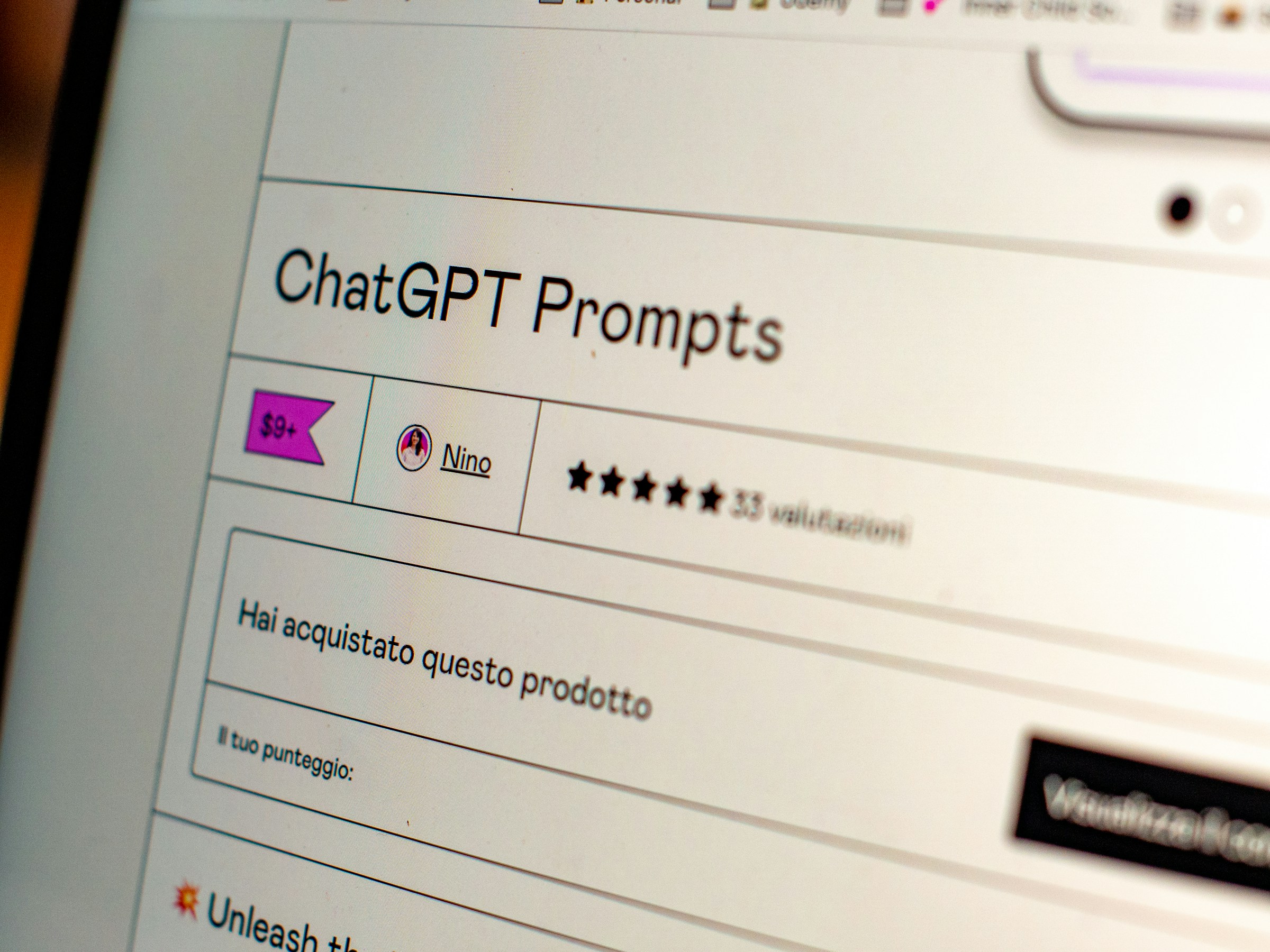
Everyone is talking about AI. Most people are just watching. Some are getting paid.
ChatGPT prompts aren’t hype. They’re tools. And tools solve problems people will gladly pay for.
If you’ve ever typed a great prompt and thought, “Wow, that saved me time,” you’re already holding value.
People are selling prompt packs to bloggers, marketers, business owners, and creators every day.
Some make side money. Others turn it into a quiet, steady income. No coding. No fancy tech skills.
This guide shows you how it works.
You’ll learn what makes prompts sell, how to turn them into products, and how to scale from your first sale to consistent income.
Step by step. No fluff. Just the playbook to success!
What Are ChatGPT Prompts & Prompt Packs?
A ChatGPT prompt is simply the instruction you give the AI to get a result, like telling a chef what dish you want instead of asking them to “make something.”
For example, “Write a friendly blog intro about saving money” will get you something basic, while “Act as a personal finance blogger and write a 120-word intro that speaks to beginners, uses simple language, and includes a relatable money mistake” gets you something far more useful.
That extra clarity is where the value lives.
A prompt pack is just a curated bundle of these well-crafted prompts, usually built around one goal or niche, and bundles sell better because buyers want a full solution, not a single tool.
It’s the difference between buying one screwdriver and buying a complete toolkit. Free prompts are often vague, generic, and hit-or-miss.
They help you try things out, but they rarely save serious time. Premium prompts are tested, specific, and built for real outcomes.
They reduce guesswork, speed up results, and feel like shortcuts that buyers are happy to pay for.
In short, free prompts inspire ideas, while paid prompt packs deliver results—and results are what people open their wallets for.
Why Prompt Packs Are Profitable
Low Startup Cost (No Inventory, No Team)
This is one of those rare businesses where you don’t need a warehouse, a staff, or a loan. You need ideas, time, and a laptop. That’s it.
You create the prompts once, save them in a document, and you’re in business. No shipping. No customer support nightmares. No managing people.
If you’ve ever wanted a business without overhead breathing down your neck, this is it.
Digital Products = High Margins
Prompt packs are digital products, and digital products are margin monsters.
There’s no cost to make a second copy. Or the hundredth. Or the thousandth. You create the product once, and every sale after that is mostly profit.
Growing Demand Across Industries
AI isn’t a trend anymore. It’s infrastructure. Bloggers use it to write faster. Businesses use it to sell more. Students use it to learn better.
And most people don’t want to “figure out prompts.” They want shortcuts. Clear instructions. Done-for-you systems.
As more industries adopt AI, the demand for high-quality prompts grows right along with it.
Scalability and Passive Income Potential
Prompt packs scale quietly, and one person can sell to thousands without adding more work.
You’re not trading hours for dollars. You’re building an asset. Sales can come in while you sleep, work, or binge a show.
It’s not fully hands-off forever, but it’s close. And in a world obsessed with hustle, that kind of leverage is hard to beat.
Who Buys ChatGPT Prompt Packs?
Bloggers & Content Creators
Bloggers want speed without losing quality. Staring at a blank page is still a thing, even with AI.
They buy prompt packs to generate ideas, outlines, hooks, and full drafts that actually sound human.
Their pain point is simple. More content and Less time with Fewer creative blocks.
Good prompts help them hit publish instead of hitting procrastinate.
Entrepreneurs & Online Business Owners
Business owners care about results, not experimenting. They want emails written, pages optimized, and offers explained clearly. Fast.
Prompt packs save them from trial and error and help them move quicker than competitors. Their biggest pain point is time.
Every hour wasted tweaking prompts is an hour not spent growing revenue.
Marketers & Social Media Managers
Marketers live by deadlines. Posts, captions, ads, hooks, and headlines never stop.
Prompt packs give them repeatable systems instead of starting from scratch every day. The pain here is burnout and inconsistency.
They need ideas that perform, formats that convert, and language that fits the platform without sounding robotic.
Students & Freelancers
Students want clarity, and freelancers want efficiency. Both want better output with less effort.
Prompt packs help students break down topics, study faster, and write cleaner work.
Freelancers use them to deliver faster, pitch better, and look more professional.
The shared pain point is pressure. Deadlines loom, expectations are high, and time is limited.
Corporate Teams & Agencies
Teams don’t want random prompts because they want standard systems everyone can use.
Prompt packs bring consistency across departments, clients, and campaigns. They solve the pain of uneven results and messy workflows.
When everyone uses the same high-quality prompts, output improves, and meetings get shorter. And nobody misses those meetings.
Best Types of ChatGPT Prompts That Make Money
Blogging & SEO Prompts
These are always in demand because content never sleeps. Bloggers want posts that rank, not just read well.
SEO prompts help with keyword research, outlines, meta descriptions, and full articles that follow search intent. The pain point is traffic.
Good prompts remove guesswork and help creators write content Google actually wants.
Social Media Content Prompts
Social media moves fast. Miss a day, and the algorithm forgets you exist.
Prompt packs here help users create hooks, captions, threads, and short-form ideas in minutes.
The pain is consistency and creativity. People want to post daily without sounding repetitive or running out of ideas by Wednesday.
Email Marketing Prompts
Email still prints money when done right. These prompts help write subject lines, sales emails, follow-ups, and newsletters that get opened and clicked.
Business owners know email works, but they struggle with wording that sells without sounding pushy.
E-commerce & Product Description Prompts
Online stores live or die by how well they explain value. Product prompt packs help create clear, persuasive descriptions, benefit lists, and FAQs at scale.
Writing hundreds of product pages by hand is brutal. Prompts turn chaos into a system.
Resume & Job Application Prompts
Job hunting is stressful enough. These prompts help users write resumes, cover letters, and interview answers that stand out.
People know their skills, but struggle to explain them well. Strong prompts act like a personal career coach.
YouTube & Video Script Prompts
Video creators need ideas that hold attention. Prompt packs here help with hooks, scripts, titles, and descriptions.
The pain is retention. Viewers click fast and leave faster. Good prompts help creators keep their eyes on the screen and grow faster.
AI Prompts for Freelancers (Upwork, Fiverr, etc.)
Freelancers sell speed and results. These prompts help write proposals, client messages, project plans, and deliverables.
When everyone looks the same, better prompts help freelancers respond faster, sound sharper, and win more gigs.
How to Create High-Quality ChatGPT Prompts
Understanding User Intent
Great prompts start with empathy. You have to know what the user actually wants, not what they say they want. A blogger doesn’t want “an article.”
They want traffic. A freelancer doesn’t want “a proposal.” They want the client to say yes.
When you understand the real goal, your prompts become sharper and more valuable.
Writing Prompts That Produce Consistent Results
A good prompt works once. A great prompt works every time. Consistency comes from clarity.
You must remove vague language and spell things out like you’re talking to a smart friend who hates guessing.
The more specific the instructions, the more reliable the output. Buyers pay for predictability. They want results they can trust, not surprises.
Prompt Frameworks (Role + Task + Format + Constraints)
This is the backbone of premium prompts. First, assign a role so the AI knows who it’s supposed to be. Then give a clear task.
Add a format so the output is usable right away. Finish with constraints to control tone, length, and style.
Testing and Refining Prompts Before Selling
Never sell a prompt you haven’t tested. Run it multiple times. Tweak the wording. Remove friction.
Ask yourself, “Would I pay for this?” If the answer isn’t a confident yes, keep refining. Great prompt creators don’t guess. They polish.
And that polish is what separates free prompts from products people happily buy.
How to Turn Prompts Into a Sellable Prompt Pack
Choosing a Focused Niche
Focus beats variety every time. A prompt pack for “everyone” sells to no one. A prompt pack for one clear audience feels custom-made.
Pick a niche with a real problem and a clear goal. One audience. One outcome. When buyers see themselves on the cover, they’re already halfway to buying.
Deciding How Many Prompts to Include
More prompts don’t always mean more value. Clarity does. A tight pack of 20 useful prompts often beats a messy pack of 200.
Each prompt should earn its place. If removing it wouldn’t hurt the result, cut it. Buyers want solutions, not homework.
Structuring Prompts for Ease of Use
Great prompts fail if they’re hard to use. Organize them in a logical flow. Group them by task or outcome. Use clear labels and short explanations.
The goal is frictionless use. Open the pack. Copy. Paste. Done. If a buyer has to “figure it out,” you’ve already lost them.
Formatting Options (PDF, Notion, Google Docs)
Format affects perceived value. PDFs feel polished and final. Notion feels flexible and modern. Google Docs are simple and accessible.
Choose based on your audience. Beginners like simple. Power users like customization. The best format is the one your buyer will actually use.
Adding Usage Instructions for Buyers
Never assume buyers know what to do. A short intro and clear instructions increase satisfaction fast.
Explain when to use each prompt, how to customize it, and what kind of output to expect.
Where to Sell ChatGPT Prompt Packs
Gumroad
Gumroad is the easiest place to start. Upload your prompt pack, set a price, and share a link. That’s it. No tech headaches. No complicated setup.
The pain point it solves is speed. You can go from idea to selling in a single afternoon.
The trade-off is competition and fees, but for beginners, Gumroad is a smooth on-ramp.
Etsy
Etsy works well because buyers already arrive ready to spend. Prompt packs fit nicely into the “digital product” ecosystem there.
The upside is built-in traffic. The downside is saturation and copycats. You’re borrowing attention, not owning it.
Still, for many sellers, Etsy becomes a steady sales engine.
Lemon Squeezy
Lemon Squeezy is for creators who want more control without heavy tech. It handles payments, licenses, and digital delivery cleanly.
It feels more professional and brand-friendly. The pain point it solves is trust.
Buyers often feel safer purchasing from a clean, standalone checkout than a crowded marketplace.
Your Own Website
This is the long game. Selling on your own site means full control over pricing, branding, and customer relationships.
No platform rules. No sudden account bans. The downside is traffic.
You must bring your own audience through SEO, email, or social media. The upside is ownership. Every visitor is yours.
Marketplaces vs Owning Your Audience (Pros & Cons)
Marketplaces give you speed and visibility. Your own site gives you leverage and stability. Marketplaces are like renting a booth at a busy mall.
Your website is owning the building. Many smart creators use both. They start where the traffic is, then slowly move buyers into their own ecosystem.
That’s how short-term sales turn into long-term income.
How to Price ChatGPT Prompt Packs
Common Pricing Ranges
Most prompt packs sell between low double digits. That range feels safe to buyers and easy to say yes to. Cheaper packs attract beginners.
Higher prices signal depth and specialization. Price should match the outcome.
The bigger the problem you solve, the higher the price you can justify.
One-Time Payment vs Bundles
One-time payments are simple and friction-free. Buyers know exactly what they’re getting. Bundles increase perceived value and average order size.
Instead of selling one pack, you sell a solution stack. People love feeling like they got more for less.
Entry-Level vs Premium Prompt Packs
Entry-level packs are quick wins. They’re affordable, focused, and perfect for first-time buyers.
Premium packs go deeper. More prompts. More guidance. More transformation. These are for serious users who want systems, not samples.
Upsells, Bundles, and Lifetime Deals
This is where revenue multiplies. A small upsell after purchase feels natural and often converts well.
Bundles reward buyers who want everything in one place. Lifetime deals create urgency and attract power users fast.
The key is relevance. Every offer should feel like the next logical step, not a random add-on.
How to Market & Promote Prompt Packs
SEO Blog Content Strategy
SEO is slow, but it compounds. Write content around problems your buyers already search for. Tutorials, comparisons, and use cases work best.
Each post should naturally point to your prompt pack as the solution. Think of it as planting seeds.
One article won’t do much. Twenty can quietly drive sales for years.
TikTok & Short-Form Video Marketing
Short-form video is attention on tap. Show quick wins. Before-and-after examples. Real prompts in action. Keep it simple and visual.
The pain point here is overwhelm. People don’t want theory. They want results in under 30 seconds. Give them that, then point them to the full pack.
Twitter/X & LinkedIn Threads
Threads are mini sales pages in disguise. Share insights, mistakes, and lessons learned. Break down one prompt or one result per post.
End with a soft call to action. These platforms reward clarity and consistency. Show up often, and people start listening. Then buying.
Email Marketing Funnels
Email is where trust lives. A simple funnel works best. Offer value first. Teach something useful. Then introduce your prompt pack as the next step.
No hard selling. Just logical progression. When done right, emails feel like advice from a friend, not ads.
Free Prompt Lead Magnets
Free prompts are bait. Good bait. Offer a small but real win in exchange for an email. This builds your list and proves your value upfront.
If the free prompt helps, buyers assume the paid pack helps more. And most of the time, they’re right.
Common Mistakes to Avoid
Selling Generic Prompts
Generic prompts feel cheap because they are. If a prompt could apply to anyone, it speaks to no one.
Buyers want shortcuts, not templates they could find for free. Specific beats clever every time. The more tailored the prompt, the higher its value.
Targeting Everyone Instead of One Niche
Trying to sell to everyone is like shouting in a crowded room. No one listens. One clear audience makes marketing easier and trust faster.
When people feel understood, they buy. Narrowing your focus doesn’t limit sales. It sharpens them.
Poor Formatting and Instructions
Great prompts can fail if they’re hard to use. Walls of text kill momentum. Confusing layouts create friction. Buyers want copy, paste, and results.
Clear sections, simple labels, and short instructions turn a good product into a great experience.
No Clear Transformation or Outcome
People don’t buy prompts. They buy results. More traffic. Better emails. Faster work.
If the outcome isn’t obvious, the product feels risky. Every prompt pack should answer one question clearly: “What will this help me achieve?”
Relying on One Traffic Source
Traffic sources dry up. Algorithms change. Accounts disappear. Depending on one platform is fragile. The safest strategy is diversification.
SEO, email, and social together create stability. When one slows down, the others keep sales moving.
Legal & Ethical Considerations
Copyright Concerns
Prompts themselves can be sold, but honesty matters. You’re selling the instructions, not ownership of the AI’s output. Make that clear.
Never claim buyers own exclusive rights to generated content unless you can back it up. Transparency avoids headaches later.
Platform Terms & AI Usage Policies
Every platform has rules. Marketplaces, payment processors, and AI tools included. Read them. Skimming is how accounts get flagged.
Some platforms restrict how AI products are described or marketed. Staying compliant keeps your income stable and your sleep uninterrupted.
Refunds and Customer Expectations
Clear expectations reduce refunds. Tell buyers exactly what the prompt pack does and does not do. Offer reasonable refunds, not open-ended promises.
A simple policy builds trust and prevents disputes. Happy buyers complain less and recommend more.
Avoiding Misleading Claims
Avoid “get rich quick” language. Overpromising kills credibility. Prompts are tools, not magic. Results depend on use, effort, and context.
Honest marketing attracts better customers and fewer problems. Long-term success is built on trust, not hype.
Step-by-Step Action Plan to Get Started
1. Pick a Niche
Start small and specific. Choose one audience with one clear problem. The clearer the pain, the easier the sale. Don’t overthink it.
Pick something you understand or can research quickly. Action beats perfect planning.
2. Create Your First Prompt Pack
Build a lean pack focused on results. Solve one problem well. Test every prompt. Refine the wording. Cut anything that feels weak.
Your first product doesn’t need to be massive. It needs to be useful.
3. Set Up a Selling Platform
Choose one platform and move forward. Gumroad, Etsy, or your own site all work.
Upload the product. Write a simple description. Add clear benefits. Done is better than polished at this stage.
4. Launch with a Simple Promotion Strategy
Don’t wait for perfection. Share the product where your audience already hangs out.
One blog post. A few short videos. A couple of posts. Early feedback is gold. Listen to it and then lean in to the one that gives you the best results.
5. Improve and Expand Over Time
This is where momentum builds. Improve what sells. Fix what doesn’t. Add more packs. Bundle products. Raise prices when value increases.
Treat this like a system, not a one-off. That’s how small wins turn into real income.
Final Thoughts
Prompt packs are still flying under the radar. Most people use AI. Very few package their knowledge and sell it. That gap is the opportunity.
You don’t need to be an expert. You need to start. Build small. Test fast. Learn as you go. Momentum beats mastery every time.
A good prompt is helpful. A prompt pack is an asset. Create it once. Improve it over time. Let it work while you don’t.