
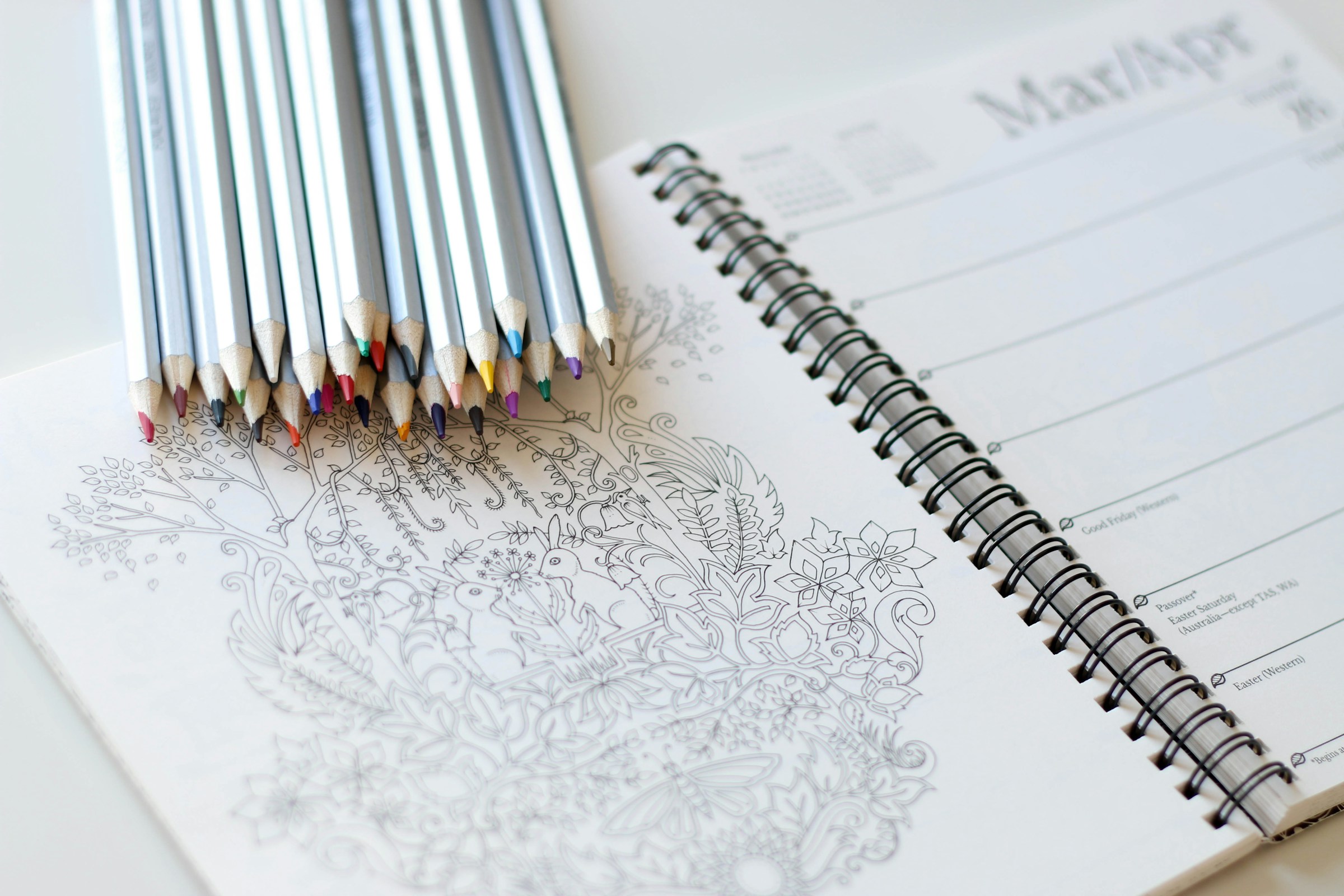
Starting an online business can feel overwhelming, but low-content publishing keeps things simple.
Think journals, planners, notebooks, and coloring books—the kinds of products people use every day without thinking twice.
They’re easy to create, quick to publish, and surprisingly profitable.
You don’t need writing skills, fancy tools, or a big budget. Just a smart idea, a clean design, and a bit of patience.
It’s like planting a tiny seed that grows while you sleep. One upload today can bring in sales for months.
If you’ve ever wondered how to earn passive income without burning yourself out, this is one of the easiest paths to start with.
Let’s break it down step by step!
What Counts as Low-Content Publishing?
Low-content publishing is all about creating books that don’t rely on lots of written text.
Instead, the value comes from simple, repeatable layouts people fill in or use every day. Think of it as offering structure rather than storytelling.
Here’s the quick breakdown:
- Low-content books include guided pages, prompts, or structured layouts.
- No-content books are extremely simple—often just lined or blank pages.
Popular formats include:
- Journals
- Notebooks
- Planners
- Coloring books
- Logbooks
- Activity books
If it’s useful, easy to complete, and doesn’t need long-form writing, it probably fits under the low-content publishing umbrella.
Why Start a Low-Content Publishing Business?
Low startup costs
One of the biggest perks is how cheap it is to get started. You don’t need fancy software, a warehouse, or money for bulk printing.
Tools like Canva or Book Bolt make creating interiors easy without draining your wallet.
Because the risk is so low, you can try different ideas without feeling like you’re betting the farm.
No need for writing experience
You also don’t have to be a writer, and not even a little. These books focus on structure, layouts, and usability, not long chapters or polished storytelling.
If you can organize a page or choose a clean design, you’re already halfway there.
People buy prompts, trackers, and pages they can fill in, not paragraphs of text.
Quick product creation
Low-content books are fast to make, which is a breath of fresh air if you’ve ever tried writing anything longer than a grocery list.
A journal or planner can be finished in a day. Templates help speed things up even more.
This quick turnaround lets you test new ideas, learn from real sales, and improve without months of waiting.
Passive income potential
Here’s where it gets exciting: you create once, and the book can sell over and over.
Amazon prints and ships it for you, which means you’re not packing boxes or juggling logistics.
It’s not magic money, and you’ll still tweak your designs and listings.
But over time, it starts to feel like planting seeds that quietly grow in the background.
Global marketplace reach (Amazon KDP, Etsy, Shopify)
And the best part? Your products can reach customers all over the world without you lifting a finger. Amazon KDP handles printing and shipping.
Etsy brings in buyers looking for unique or aesthetic designs. Shopify lets you build your own brand once you’re ready.
With these platforms, your work has a global stage, even if you’re working from your couch in pajamas.
Choosing Your Niche
Why niche selection matters for sales
Choosing the right niche can make or break your success. A great design won’t help if no one is looking for that type of book.
At the same time, even a simple notebook can sell well if it targets the right audience.
Think of niche selection as choosing your lane on a busy highway — pick the right one, and you move smoothly; pick the wrong one, and you’ll sit in traffic watching others zoom past.
How to research demand
Before jumping in, it’s smart to see what people are actually buying.
- Amazon search trends: Start typing keywords into Amazon and see what auto-suggestions pop up. Those suggestions come from real searches, which means real demand.
- Best Seller Rank (BSR): A low BSR means a product is selling well. Check similar books in your niche and look for patterns. If multiple books have low BSRs, the niche has healthy demand.
- Competitor research: Look at top sellers. What do they do well? What are they missing? Reviews are gold mines, and customers often tell you exactly what they wish the book had.
- Seasonal niches: Some niches boom at specific times, like wedding planners in spring or fitness logs in January. Seasonal books can bring huge spikes in revenue if timed right.
Examples of profitable niches
If you need a starting point, here are some niches that consistently perform well:
- Fitness logs — perfect for people tracking workouts, meals, or progress.
- Wedding planners — super popular during engagement season and a great gift item.
- Kids’ coloring books — always in demand, especially with fun themes or educational elements.
- Gratitude journals — simple, meaningful, and ideal for wellness-minded buyers.
Planning Your First Product
Identifying your target audience
Know who you’re designing for before you open Canva.
Ask simple questions: Who will use this book? What problem does it solve? When do they use it — mornings, commutes, evenings?
Picture one real person. Give them a name and habits. That makes design choices obvious.
Quick steps to define your audience:
- List demographics (age, gender, job, location).
- Note behaviors (daily routines, pain points, buying habits).
- Write a one-sentence user story: “Maria, a busy teacher, needs a 5-minute planner to stay on top of lesson prep.”
Why this matters: a planner designed for a college student will look different from one for a retired gardener.
Targeting narrows your focus and raises the chance someone will click “buy.”
Choosing the right format (size, pages, layout)
Format affects both cost and user experience. Size and page count influence printing price and perceived value.
Layout determines whether users actually keep using the book or toss it in a drawer.
Format checklist:
- Size: Popular sizes include 6×9, 8.5×11, and 7×10. Pick a size that matches the purpose — pocket notebooks vs. desk planners.
- Pages: 60–120 pages are great for starters. Longer equals higher price and perceived value; shorter is cheaper and easier to test.
- Interior layout: Decide lines, prompts, checkboxes, or grids. Keep spacing comfortable. Use margins that printers like (KDP requires bleed and margin rules).
- Extras: Add an index, inspirational quotes, or a title page to boost polish.
Think like a user: would they want a compact notebook they can carry or a roomy planner they leave on the desk? Match form to function.
Creating a value-driven concept instead of generic templates
Don’t be “another notebook.” Add real value that solves a tiny but nagging problem.
Value can be functional (habit trackers), emotional (encouraging prompts), or practical (monthly budget sheets).
How to build a value-driven product:
- Identify a clear outcome. What will the buyer achieve after using this book for a month?
- Solve a pain point. Read competitor reviews and list gaps you can fill.
- Add a unique twist. Combine ideas: a fitness log + meal planner, or a gratitude journal with weekly challenges.
- Prototype quickly. Create 5–10 interior pages, test with friends or social followers, then iterate.
Remember: buyers pay more for usefulness than for “pretty.”
A clean, thoughtful layout that helps someone finish a task will beat a bland template every time.
Designing Low-Content Books
Tools to use
You don’t need high-end software to create a beautiful book. Start simple and upgrade only when you feel comfortable.
- Canva: Perfect for beginners. Drag, drop, and you’re done. It’s easy, fast, and has plenty of templates for interiors and covers.
- Adobe Illustrator: A powerhouse for designers who want custom graphics and full control. If precision is your love language, Illustrator has your back.
- Book Bolt: Built specifically for low-content creators. Great for niche research, quick interiors, and ready-made templates.
- Affinity Publisher: A budget-friendly alternative to Adobe software. Smooth learning curve, professional features, and a one-time purchase instead of a monthly subscription.
Interior design tips
A good interior makes people actually use your book and come back for more. Think clean, calm, and easy on the eyes.
- Clean, consistent layouts: Keep fonts, spacing, and styles uniform. If your lines jump around like a hyper puppy, users won’t enjoy writing on them.
- User-friendly spacing: Give people room to breathe. Tight spacing feels stressful, while generous spacing feels inviting.
- High-quality elements: Use crisp lines, balanced shapes, and readable fonts. No blurry clipart, no pixelated graphics. If it looks cheap, users can tell instantly.
Cover design tips
Your cover is the billboard for your book. It’s the first thing shoppers see and the main reason they click.
A great interior won’t save a boring cover, but a strong cover can absolutely sell an average book.
- Importance of eye-catching covers: Your cover should grab attention even at thumbnail size. Think bold, clear, and instantly understandable.
- Color, typography, and style: Choose colors that match the niche — calm tones for wellness, bright colors for kids, modern aesthetics for planners. Use fonts that are clean and readable. Avoid mixing too many styles. Simple is stronger.
- Avoiding common mistakes: Don’t overcrowd your cover. Don’t use clashing colors. Don’t use tiny text that no one can read. And please, no random graphics that have nothing to do with the book. If you’re making a fitness log, maybe skip the clipart of a dolphin wearing sunglasses.
A polished cover tells buyers, “This is worth your time.” And in the crowded world of low-content publishing, that’s your biggest advantage.
Publishing Your Book on Amazon KDP
Publishing on KDP is a straightforward process if you follow the steps.
Below is a clear, practical walkthrough so you don’t get tripped up by small details.
Account creation
Sign up at Kindle Direct Publishing and fill in your payment and tax details so Amazon can pay you.
Create your Bookshelf and click + Create to start a new title.
Keep your author/publisher name consistent because it’s your brand on the product page.
Uploading interiors and covers
KDP asks for two main files: the interior (manuscript) and the cover.
For print books, you’ll upload a PDF interior and either a PDF cover or a full-wrap cover image that matches the trim size and bleed settings.
Use KDP’s manuscript and cover templates if you’re unsure about margins or spine calculations.
Preview the book with KDP’s online previewer to catch formatting issues before you publish.
Choosing categories and keywords
Pick up to two categories during setup, and use the keyword fields to add up to seven relevant phrases (each field has a character limit).
Treat categories like shelves where your book will live, and keywords as tiny signposts that help searchers find you.
Use Amazon autocomplete, competitor listings, and reviews to find useful keyword ideas, and avoid repeating category words in keyword slots.
You can update categories and keywords later via the Bookshelf.
Pricing strategy
Set a price that covers printing costs and leaves a reasonable royalty.
For print-on-demand, KDP subtracts printing costs from royalties, so higher page counts and color interiors raise the cost.
Check similar books in your niche to see typical pricing; low-content paperbacks often sit in a lower price band, while planners or premium color interiors can command more.
Consider experimenting with price points once your book is live.
Understanding KDP print options
KDP supports paperbacks and hardcovers, a range of trim sizes, and color or black-and-white interiors.
Paper type and color choices affect cost and appearance — color printing is pricier and not available for some hardcover options.
Pay attention to minimum/maximum page counts for each format (hardcovers may have higher minimums).
KDP prints on demand and ships globally, which removes upfront inventory from your workload.
Marketing Your Low-Content Products
Marketing doesn’t have to feel like shouting into the void.
With low-content books, the goal is simple: help the right people find your product at the right time.
A mix of smart optimization and light promotion can go a long way.
Organic methods
The best part about KDP is that Amazon already has millions of shoppers. Your job is to make your book discoverable.
Optimizing Amazon keywords
Your keywords should match what real people are typing into the search bar. Think like a shopper, not a seller.
Instead of “motivational journal,” a buyer might search for “daily gratitude journal for adults” or “5-minute reflection journal.”
Use clear, specific phrases that match your niche.
Using niche-specific titles
Your title should instantly explain what the book is and who it’s for.
“Fitness Log for Beginners” performs better than “Strong Start” because the buyer immediately knows the purpose.
Leveraging categories and A+ content
Categories help Amazon place your book on the right virtual shelf. Choose the ones that match your niche, not the most popular ones.
If you unlock A+ content later, use it to show page previews, highlight features, and build trust. It adds polish and makes your listing feel more premium.
Off-platform promotion
If you want extra traction, promoting your book outside Amazon can give you a nice boost, especially in competitive niches.
Pinterest is perfect for planners, journals, and coloring books. Create pins that show mockups or page previews.
Pins last for months, sometimes years, which means ongoing traffic without constant posting.
TikTok
Short videos showing your book, the interior, or the design process can work surprisingly well.
People love behind-the-scenes moments, and “plan with me” or “journal with me” content is already popular.
Email lists
If you build a small audience around productivity, wellness, or creativity, an email list becomes gold.
You can share new releases, bundles, and seasonal products directly with people who already love your work.
Etsy cross-selling
Selling printables or digital versions on Etsy gives you another income stream.
It also exposes your designs to a different audience because many Etsy shoppers never browse Amazon, and vice versa.
Importance of building a brand over time
At first, you might feel like you’re throwing spaghetti at the wall, hoping something sticks. But over time, branding becomes your secret advantage.
A consistent style, tone, and niche help readers recognize your work instantly.
When someone buys one of your journals and loves it, they’ll look for your name again.
A strong brand turns one-time buyers into loyal fans and in low-content publishing, that’s where long-term success really begins.
Scaling Your Business
Creating product series (bundle strategy)
Once you have a book that sells, don’t stop there — expand it into a full series. People love consistency.
If a customer enjoys your fitness log, they might also buy the meal planner, the progress tracker, and the matching habit journal.
Series also boost your visibility on Amazon because your books start appearing in the “Customers also bought” section.
Think of it as building your own little ecosystem.
Expanding into medium-content books (activity books, puzzles)
When you’re ready for a challenge, step into medium-content products.
These include activity books, puzzle books, and guided journals with a bit more thought behind them.
They take longer to create, but they also stand out more and face less competition.
Even small additions like prompts, challenges, or themed pages can move your product from “simple” to “valuable.”
Outsourcing design work to save time
As your catalog grows, you might hit a wall with time or creativity. Outsourcing can be a lifesaver.
Platforms like Fiverr or Upwork let you hire designers who can build interiors, covers, or illustrations while you focus on strategy.
Outsourcing doesn’t mean giving up control, but it means working smarter. You get more products out the door without burning yourself to a crisp.
Tracking sales and adjusting for trends
Amazon gives you data for a reason, so use it. Check which books sell steadily and which disappear into the void.
Notice patterns: certain colors, niches, formats, or cover styles might perform better. Keep an eye on seasonal spikes too.
If your planners sell in December, prep your next batch in October. Treat your sales dashboard like a compass.
It won’t tell you exactly where to go, but it will always point you in the right direction.
Common Mistakes to Avoid
Oversaturated niches without differentiation
Some niches are so crowded that it feels like trying to sell lemonade in a mall full of lemonade stands.
If you enter a saturated niche with nothing new to offer, your book will vanish into the background.
You don’t have to reinvent the wheel — just add a twist that makes your product stand out.
A different layout, a unique theme, or a more thoughtful concept can be enough to rise above the noise.
Poor cover design
Even the best interior won’t save a bad cover. If your cover looks dull, cluttered, or unclear, buyers will scroll right past it.
Covers need to grab attention fast, especially at thumbnail size. Focus on clean typography, balanced colors, and a clear message.
Your cover should instantly tell shoppers, “This is exactly what you’re looking for.”
Low-quality interiors
Rushed interiors show, and shoppers can spot sloppy work in two seconds.
Uneven spacing, blurry graphics, and awkward layouts make your product feel cheap. Remember, someone will use your pages every day.
Give them space to write, clean lines to follow, and a layout that feels intentional. Quality keeps customers coming back.
Publishing too many low-value books quickly
Speed is great, but flooding your account with low-effort books won’t help you grow. Amazon rewards quality and relevance, and not quantity.
Instead of pushing out 30 notebooks in a week, focus on creating one or two truly useful products. Think long-term.
A handful of high-quality books can outperform dozens of rushed ones.
Ignoring keyword research
Keywords are how buyers find you, and skipping this step is like hiding your book at the back of the store.
If you don’t understand what people are searching for, your listing won’t show up in results.
Use Amazon autocomplete, competitor listings, and niche terms that match your audience.
Good keyword research helps you reach real customers instead of shouting into the void.
Final Words
Starting a low-content publishing business is one of the simplest ways to earn online without needing big skills or big budgets.
It’s flexible, beginner-friendly, and full of room to grow. You can test ideas, learn fast, and build a steady income one thoughtful product at a time.
Begin with just one well-designed book. Don’t overthink it.
Pick a niche, create something useful, and get it out into the world. Momentum starts with the first step.
You’ve got everything you need to begin. Now go make something you’re proud of!